#Opencallarticle4: This blog is part of an ‘open call’ to researchers, students or anyone interested in ethnobotany to write an article for the SEB student blog.
Here’s the fourth article from this call by Kat Morgan, MPH, New York University, Department of Environmental Studies
Title: “On Listening to the Land: Celebrating Hopniss and the Future of Our Food”
1. Why Hopniss?
This summer, I researched ‘future foods’ as part of a unique collaboration with artist George Ferrandi and Dr. Sonali McDermid. We identified crops that could survive in Richmond, Virginia, a millennium from now, to help create a tasting menu for Ferrandi’s upcoming “Jump!Star” exhibition.[1] The crop list encompasses complex histories, climate resilience analyses, and the relevance of plants on a broader temporal scale, while also foregrounding the role of historically undercelebrated people in the invention of future food cultures.
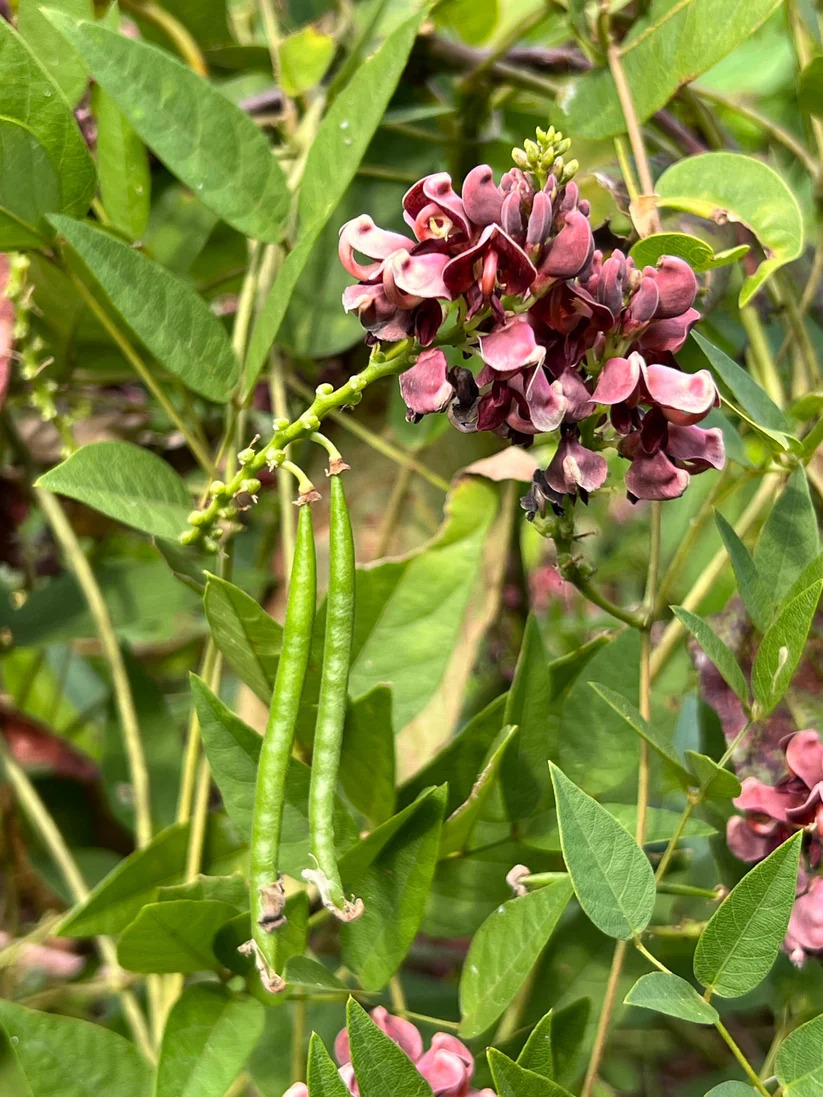
The project left me with more questions than answers about a leguminous plant indigenous to North America, identifiable through its Latin name, Apios Americana, and otherwise known as the “Potato Bean”, “American Groundnut”, and more accurately, its Lenape name “Hopniss”.
Memory is a fickle thing, but I feel a sense that I’ve already met Hopniss in the wild. Growing up in North Alabama, where I spent my childhood exploring the forest, the richness of the regional flora, fauna, and fungi sparked an endless curiosity. Nature speaks, but it is up to us to listen. Hopniss is largely underutilized today, but it is not too late to answer its call. I wanted to understand how we can cultivate a place for Hopniss in our future food systems, so I conducted a deeper investigation into the historical, agronomic, and ethnobotanical implications of human relationships with this plant, with the hope of sparking interest in and renewing ancient vows of reciprocity between humans and Hopniss.
2. A Rich History
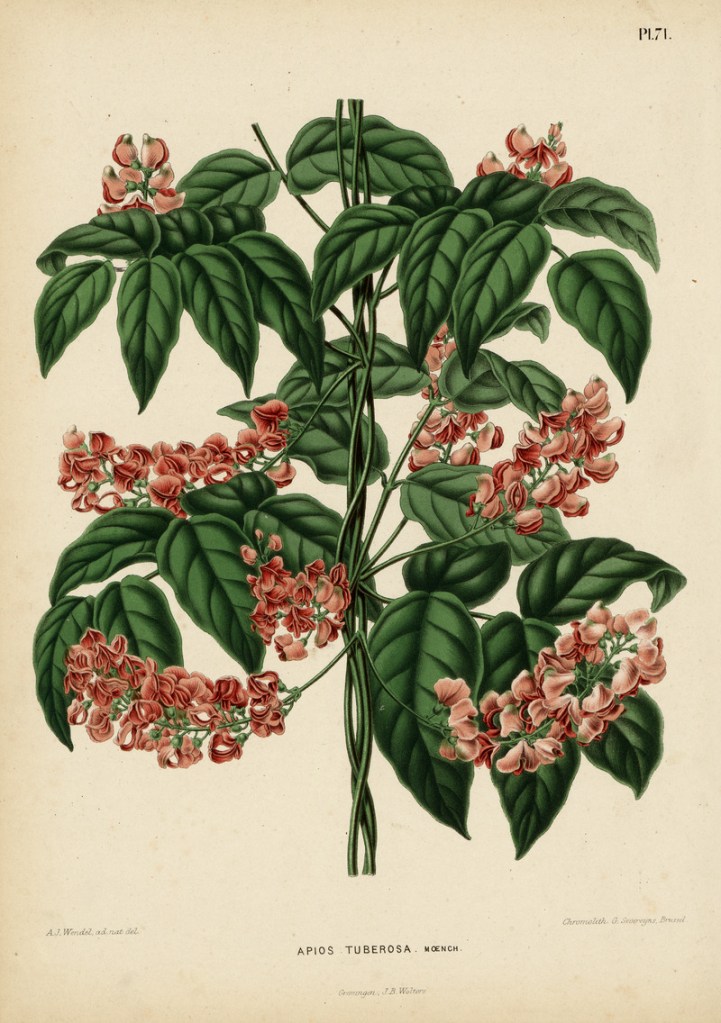
A plant that nourished North Americans for over a millennium, from the First Peoples to Settler Colonialists, Hopniss is a perennial twining vine, known for its tasty tubers, beans, and flowers as a member of the Faboideae subfamily of Fabaceae. It grows well in heat, sun, prefers moist soils, but can persist in drought-prone localities.[2] Hopniss was an excellent food crop candidate for wild harvesting and later cultivation in the Southeastern U.S., my home region, which is getting warmer and wetter as a result of climate change.[3] Archaeobotanical evidence confirms the presence of Hopniss in the Eastern Agricultural Complex of North America[4], which was one of about 10 independent centers of plant domestication in the prehistoric world.[5] Oral history and ethnobotanical archival research reinforce the idea that many Native American groups not only cultivated A. americana but knew it by many names and traded accessions up and down the Eastern seaboard[6], implying that this plant was a stable food source due to its versatility and resilience.
Most parts of the plant are edible — shoots, flowers, beans, and the tubers — with evidence that the pods were steamed and shelled for consumption by the Aniyvwiya, while other sources generalize that the tubers were often fried in animal fat or boiled in maple syrup by the Menominee, Potawatomi, and other First Peoples.[7] Of course, from a historical purview, the tubers could be stored over the cold season to combat food scarcity over long winters. The Menominee built scaffolds of cedar bark covered with mats to dry the tubers for winter use.[8] The Wampanoags are reported to have taught the pilgrims how to harvest and prepare Hopniss, which the settlers relied on for survival due to the colony’s limited grain supplies during the early years.[9] This historical documentation underscores how the survival of settlers was often contingent on the place-based knowledge of First Peoples, a fact I am keenly aware of as I live in the Lenapehoking territory, also known today as Manhattan. In October 1852, Henry David Thoreau mused about Hopniss, “I dug some ground nuts with my hands in the railroad sand bank, just at the bottom of the high embankment on the edge of the meadow. These were nearly as large as hen’s eggs. I had them roasted and boiled at supper time. The skins came off readily, like a potato’s. Roasted they had an agreeable taste, very much like a common potato, though they were somewhat fibrous in texture.”[10]
3. The Modern Promise
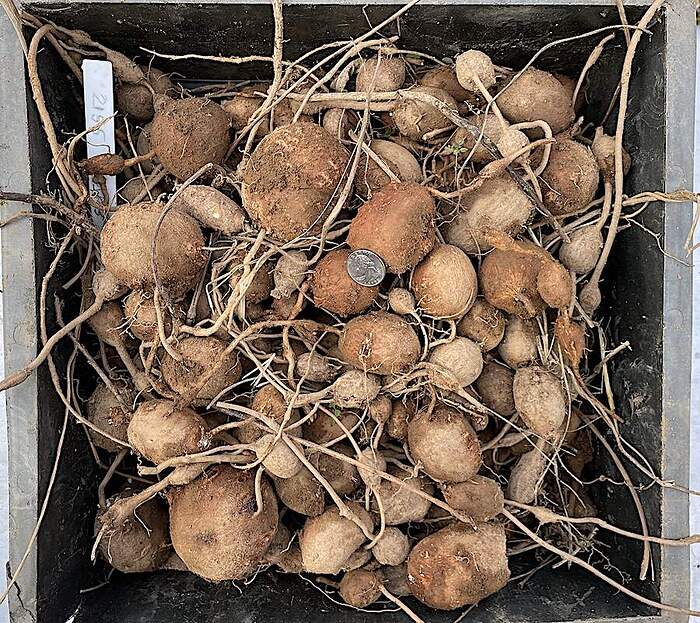
Today, Hopniss is best known among enthusiasts for its tubers, which are still roasted, boiled, dried, and ground into a thickening powder for stews, and were recently proposed as a gluten-free alternative to cereal flour.[11] The flavor of its tubers is often described as a nutty potato, where present-day qualitative accounts of folks’ experience eating Hopniss are quite diverse across a variety of cooking methods with mixed reviews on palatability, ease of preparation, and, of course, the timeless issue that comes with beans: gastrointestinal stress.[12] The diversity of preparation methods documented suggests that, similar to many other legumes, the presence of antinutrients in Hopniss necessitates longer cooking times. Place-based preparation techniques for various Fabaceae species around the world, including Hopniss, suggest the role of traditional knowledge in complementing our contemporary relationships and consumption of these plants.
Hopniss contains anti-nutrient compounds like protease inhibitors (such as trypsin inhibitors), alpha-amylase inhibitors, and saponins, which interfere with protein digestion by inhibiting enzymes that are essential for protein breakdown in the body.[13] Boiling or roasting can significantly reduce or eliminate these inhibitors, making the nutrients more bioavailable. Tubers exude a creamy latex after cutting as a natural wound-sealing reaction, which informally has been discussed as a potential issue for those with latex allergies, and also documented by online enthusiasts as a hassle to clean after cooking.[14]
The full spectrum of biochemical components in Apios is yet to be characterized and will vary based on agro-environmental metadata; still, the available data indicate that the nutritional profile may exceed that of modern potato monocultures (Solanum tuberosum) in terms of macronutrient profiles and bioactive content. Hopniss and its relatives are unusually protein-rich compared to most root crops (Hopniss has a lesser known cousin Apios priceana in North America and more distant cousins in Eastern and Southeastern Asia). One study in the U.S. found that A. Americana seeds and tubers respectively contained 4.10% and 1.78% nitrogen on a dry weight basis, which with a nitrogen-to-protein conversion factor of 6.25, corresponds to 25.6% protein content for seeds and 11.1% for the tuber.[15] Researchers in Japan found that within the monosaccharide and oligosaccharide content of Apios americana tubers, 86-90% was composed of glucose and sucrose.[16] The simple sugars translate to quick energy conversion in the body, while oligosaccharides serve as a prebiotic fiber to promote digestive health. With a high starch content in the tuber (68%), Hopniss contains a significant portion of the daily dietary needs and could be a potential staple food to sustain human energy needs.[17] Finally, Hopniss is also a much richer source of beneficial phytochemicals, containing higher concentrations of flavones (1.33 g/100 g) and isoflavones (4.16 g/100 g) in the tubers, which are bioactive compounds that act as antioxidants, combating cellular damage from toxins and inflammation.
4. Roadblocks to Cultivation
While we look forward to agricultural innovations that will enable us to adapt to our changing climate, it seems deeply remiss and irresponsible to overlook Apios and similar plants, given their profound historical legacies and place-based knowledge in ensuring human subsistence and survival. Recently, various permaculture and foraging enthusiasts have written about this “golden nugget,” but it doesn’t seem to have caught on in our social collective consciousness. Part of this is likely due to the fact that creating markets for plants that take time to develop a substantial yield is challenging for farmers, given the current design of our yield-obsessed, calorie-centric food system. While tubers can be harvested in year one, it takes two or three years to produce a sizeable crop, and the same timeline can be applied for a significant bean harvest.[18] Dr. William “Bill” Blackmon and colleagues at Louisiana State University collected over 200 accessions of wild Hopniss in the 1980s and 1990s, which led to the development of 53 hybridized accessions.[19] In the mid-1990s, a specialty produce company attempted to market the tubers of this incredible legume to an uninterested customer base.[20]
5. A Look to the Future
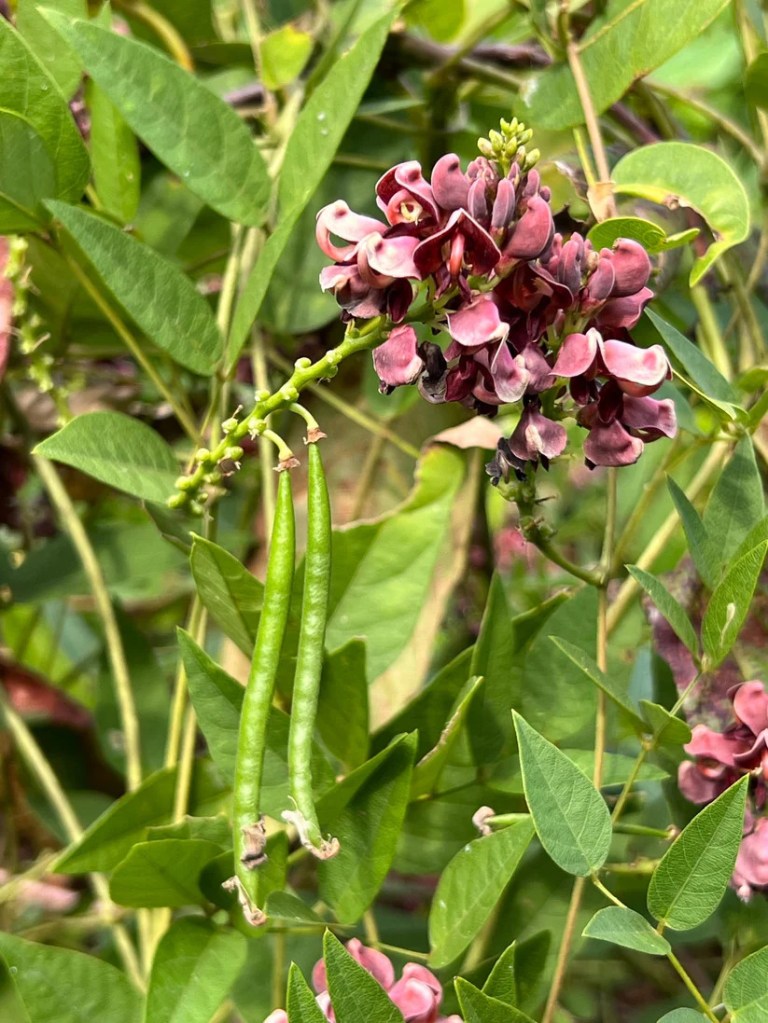
I asked my 95-year-old grandmother, who grew up on a farm in rural Alabama during the Great Depression, and still maintains a large garden, whether she’d heard of anything like Hopniss. I described its various colloquial names, what it looked like, and promised to send her a picture (which she is tech-savvy enough to look at on her iPhone). She’d never heard of it. I look up to my grandmother as someone with 90+ years of place-based knowledge about her environment, and I was left to simmer on the idea of reckoning with cultural amnesia.
While so much of our attention today is delegated to “improved” crops for large-scale production, we overlook the rich history of human-plant relationships over a much longer interval. The very act of cultivating Hopniss—of listening to its needs, and nurturing a perennial that is patient on a timescale far longer than our own—is an act of reciprocity. It offers a counterpoint to the extractive, instant gratification practices that have defined industrial agriculture as a major contributor to the climate crisis.[21] For those with a keen interest in reviving the human cultivation of this wonderful plant, Hopniss can help us generate authentic relationships with the environment we share among all living things.
Dr. Robin Wall Kimmerer, a North Star for many Indigenous and non-Indigenous folks who learn from plants, aptly notes, “Science is great at answering true-false questions, but science can’t tell us what we ought to do. Because TEK has a spiritual and moral responsibility component, it has the capacity to also offer guidance about our relationship to place.”[22] The rich history of human-plant relationships and the various forms of wild harvesting and cultivation offer guidance on how to improve our own livelihoods and reconsider plants as more than just calories. The path to resilience is found in wisdom that has been patiently waiting for us to listen.
Author bio: Kat Morgan is a food systems professional and doctoral student at New York University’s Environmental Studies Department. Her mixed-methods research bridges ethnography, ethnobotany, and environmental science to examine the synergies between traditional ecological knowledge, human and planetary health, and climate change. She holds a Master of Public Health in Environmental Health from Columbia University and hosts the award-winning Oh Crop! Food Systems Podcast.
email: kpm8531@nyu.edu
Online portfolio: click here
References
[1] https://www.1708inlight.org/
[2] https://www.legumesociety.org/wp-content/uploads/2020/11/legum_perspect_19.pdf
[3]https://climate.sph.emory.edu/news/changing-climate-presents-major-threats-for-southeast-opportunities-for-future/
[4] https://archive.org/details/emergenceofagric00smit/page/184/mode/2up
[5] https://ojs.ethnobiology.org/index.php/ebl/article/view/1714/906
[6] https://www.legumesociety.org/wp-content/uploads/2020/11/legum_perspect_19.pdf
[7] https://www.fondazioneslowfood.com/en/ark-of-taste-slow-food/apios-americana/
[8] Beardsley, G. (1939). The groundnut as used by the Indians of eastern North America. Michigan Academy of Science, Arts, and Letters, 25, 507-515.
[9] https://www.legumesociety.org/wp-content/uploads/2020/11/legum_perspect_19.pdf
[10] https://books.google.com/books/about/Wild_Fruits.html?id=wf5JJgKhZjoC&source=kp_book_description
[11] https://pubmed.ncbi.nlm.nih.gov/32919271/
[12] https://friendsofeloisebutler.org/pdfdocs/groundnutarticle.pdf
[13] https://academic.oup.com/bbb/article/72/1/171/5954307?login=true
[14] https://permies.com/t/39122/taste-test-Apios-americana-blehhhh
[15] https://ift.onlinelibrary.wiley.com/doi/epdf/10.1111/j.1365-2621.1987.tb14013.x
[16] https://www.jstage.jst.go.jp/article/nskkk/53/2/53_2_130/_article/-char/ja/
[17] https://www.sciencedirect.com/science/article/abs/pii/S0924224421002995
[18] https://pfaf.org/user/Plant.aspx?LatinName=Apios+Americana
[19] https://www.legumesociety.org/wp-content/uploads/2020/11/legum_perspect_19.pdf
[20] https://friendsofeloisebutler.org/pdfdocs/groundnutarticle.pdf
[21] https://www.ipcc.ch/site/assets/uploads/2018/02/ar4-wg3-chapter8-1.pdf
[22]https://www.biohabitats.com/newsletter/traditional-ecological-knowledge/leaf-litter-talks-with-dr-robin-wall-kimmerer/
Open call: If you would like to contribute an article to the SEB student blog, go ahead and send your plant story to Nishanth Gurav, email: gurav@ftz.czu.cz
Minimum: 500 words, maximum: 2000 words (including pictures) including title and article
 Society for Ethnobotany // Student Blog
Leave a comment