In this blog Irene Antonez, a multimedia artist shares about her love for fungi and her journey of resonating with them through art
“What do you do when your world starts to fall apart? I go for a walk, and if I’m really lucky, I find mushrooms.”
(Anna Lowenhaupt Tsing, The Mushroom at the End of the World)
“Nature is not our enemy to be raped and conquered. Nature is ourselves, to be cherished and explored.”
(Terence McKenna, Food of the Gods)
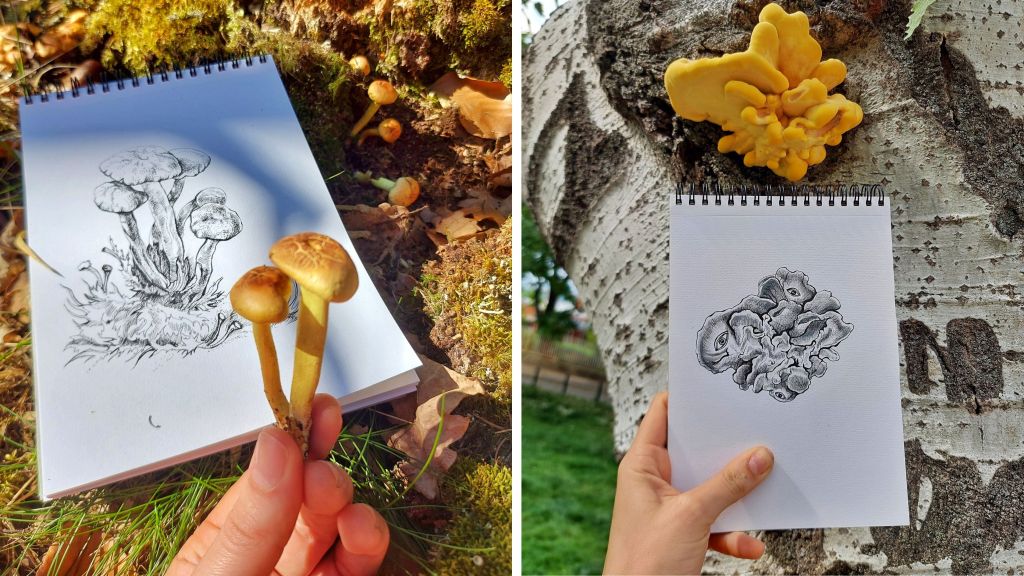
For the past eight years, my artistic practice has been focused on the mysterious and fascinating worlds of fungi and plants. The art I’ve been creating is deeply informed by direct experiences of interacting with them, conducting ethnobotanical and microscopic research, and spending lots of time in nature while learning from these fascinating organisms. However, my story takes root in times much earlier than these.
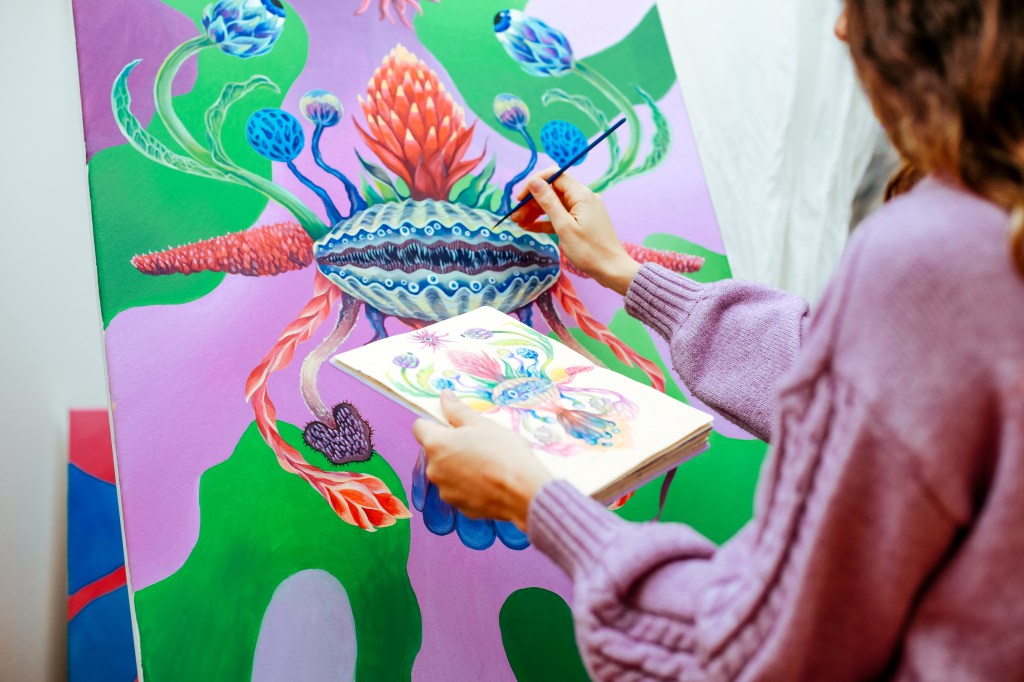
When I look back at my childhood, the dearest to my heart are the memories of mushroom picking with my family. I learnt my first mushroom names before my first words, and I would not want it any other way. The world for me growing up was full of animalistic forces, and it stayed so throughout my life. Only later was it reinforced by my exploration of animism, mycology, entheogens, as well as plant and mushroom microscopy. I see nature as Alexander Von Humboldt did: “a living organism, animated by dynamic forces”.
It is from my parents that I learnt a deep appreciation for and passion towards nature. Being a late child, I never got to properly meet my grandfather, who, as I discovered later, was obsessed with mushrooms. He filled the home with fungi-identifying books and won mushroom-picking competitions. Later, while studying for my master’s degree, I found albums decorated with my great-grandfather’s paintings of fungi in my family library, which deeply impressed me. I believe all these experiences informed my artistic path, and it felt only natural to turn towards my closest allies from the forests and fields for inspiration when searching for my artistic voice.
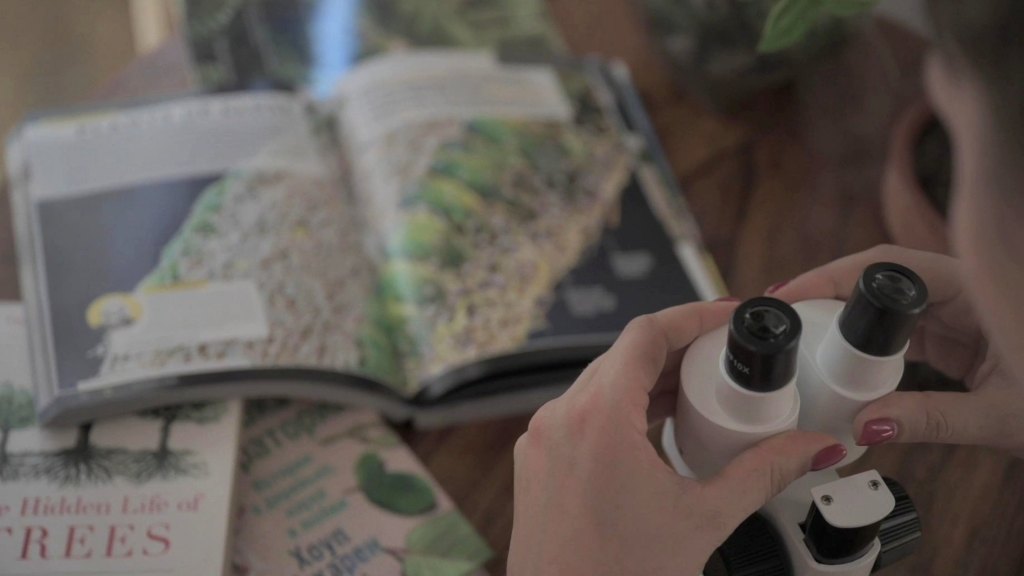
While getting my first master’s degree in Future Design, I found myself totally fascinated by mosses and trees. Researching the world of mosses also made me interested in microscopy. I would get lost in forests with my magnifying glass, discovering endless varieties of these tiny organisms everywhere, and painting them and their ways of being. Thanks to my interest in mosses, I encountered the book Gathering Moss by Robin Wall Kimmerer, whose work opened up their ecological and historical importance to me. Later on, her other books, such as Braiding Sweetgrass, had a profound influence on the philosophy behind my art. As my final project, I came up with designing and making animations for a platform celebrating similarities between trees and humans, inspired by Peter Wohlleben’s The Hidden Life of Trees.
Later on, during my second master’s degree in Fine Art, I went down the rabbit hole of fungi obsession, which was reignited by missing my family during the COVID period, as I had been living abroad and traveling for much of my adult life. I discovered a whole world of ethnobotanical and mycological literature, and Merlin Sheldrake’s book Entangled Life truly transformed my way of seeing mushrooms. “My exploration of the fungal world has made me reexamine much of what I knew. Evolution, ecosystems, individuality, intelligence, life – none are quite what I thought they were,” writes Merlin Sheldrake, and this is exactly how I have been feeling.
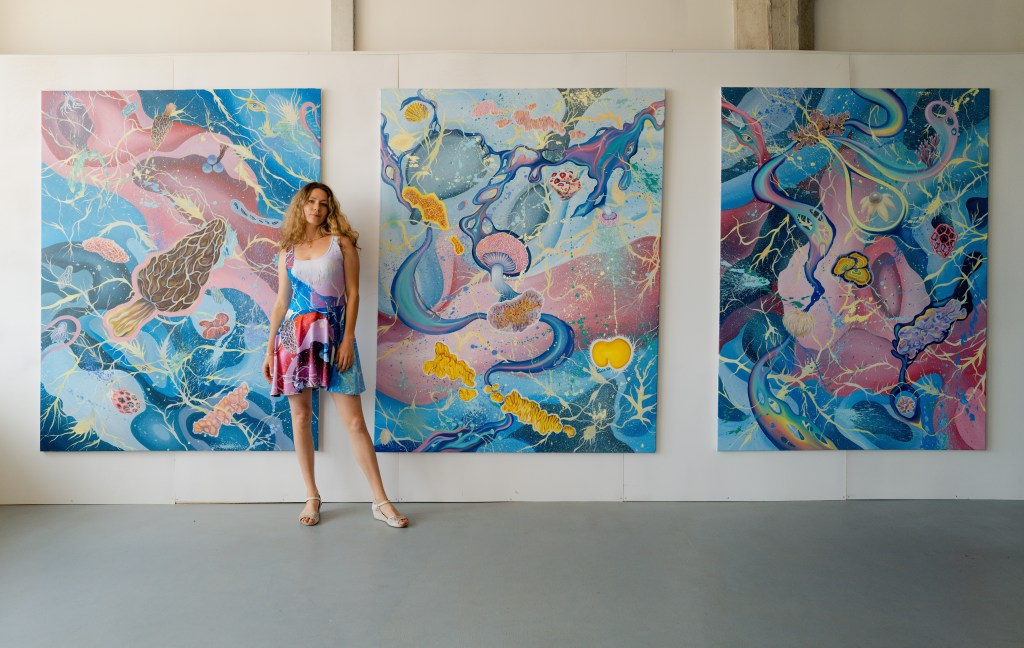
Mushrooms are elusive, surprising, unexpected, and fun, and they are all about play and loosening the grip of control when it comes to collaborating with them. You find them when you stop searching. They start to grow when you give up on waiting. Where we see death, they begin new life. So I keep going back to the forest, with my basket and my sketchbook, to listen and learn, and to humble myself again and again so I can receive new teachings from my mushroom allies. I ask fungi to help transform my vision of this world, so that I can paint a better, truer, more alive version of it.
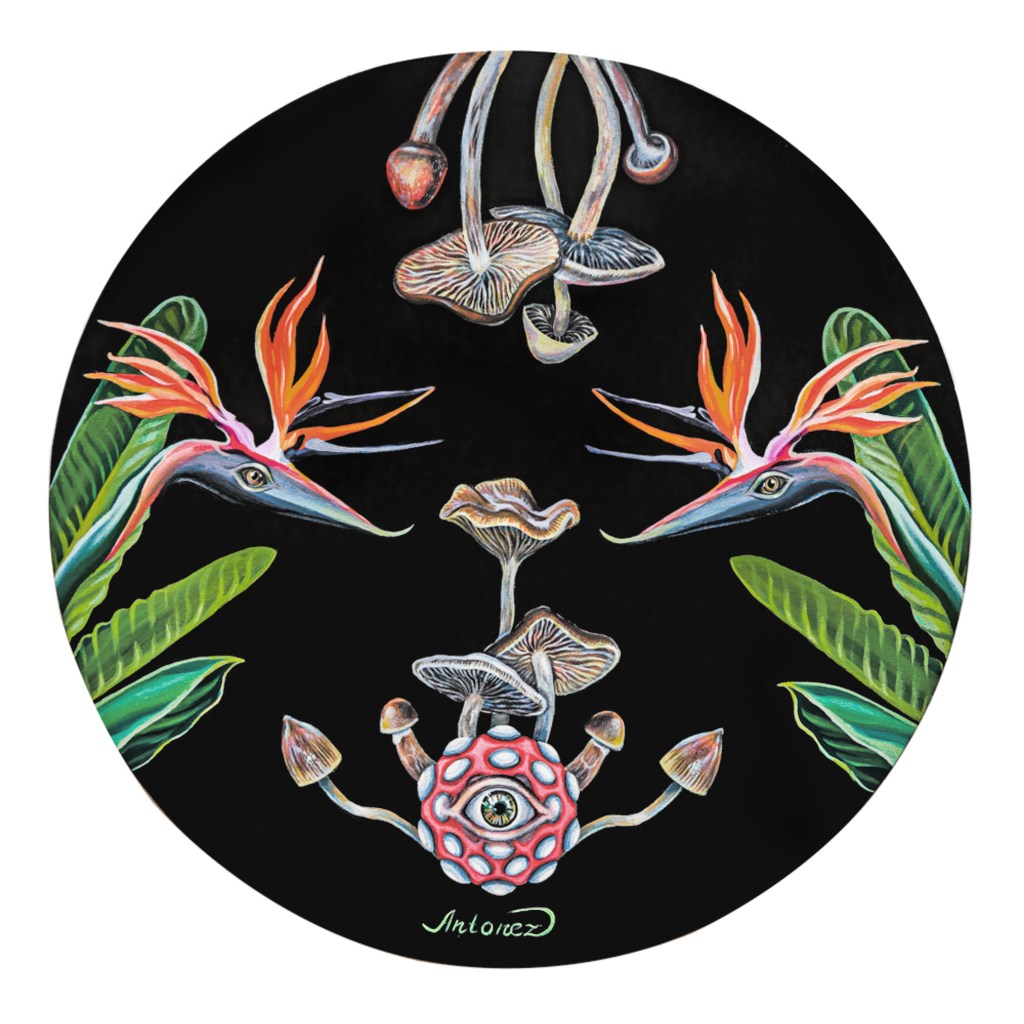
Crucial to my artistic practice is working with mind-altering plants and mushrooms. Discovering the world of psychedelics, collecting indigenous knowledge from different cultures, and researching psychedelic philosophy added a much deeper layer to my work. explore the “existence of an intelligent Other” and the concept of the “vegetable mind,” as described by Terence McKenna in Food of the Gods, through intense colors and fluid forms informed by psychedelic experience. Capturing a sense of continuous flow and transformation is essential to my work. As Czech psychiatrist Stanislav Grof described, psychedelics function as a microscope for the mind, just as scientific microscopes do for biology. In my artistic practice, science and entheogens are inseparable and complementary.
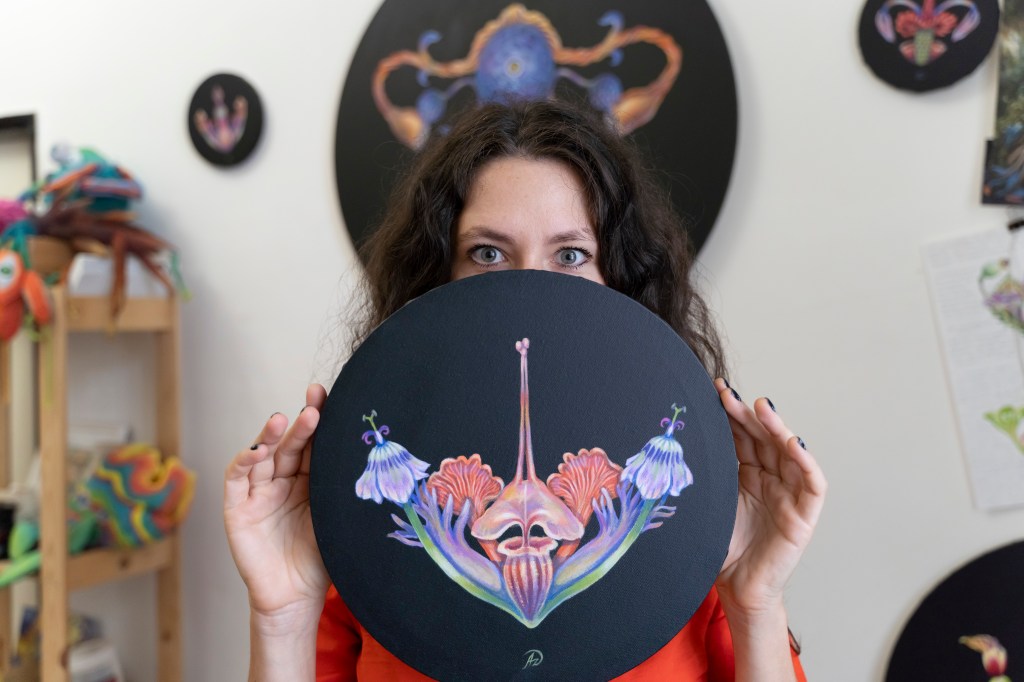
The feminine in nature has been a consistent theme in my work as well. Nature, like psychedelics, was suppressed for a long time because patriarchy is afraid of the boundary-dissolving freedom and ecstatic chaos they can evoke. Yet this dark chaos is a necessary condition for new and beautiful things to be born. As Maria Papaspyrou writes in Psychedelic Mysteries of the Feminine, “The feminine and entheogens have been suppressed because their force and energy could not be assimilated by our species.”
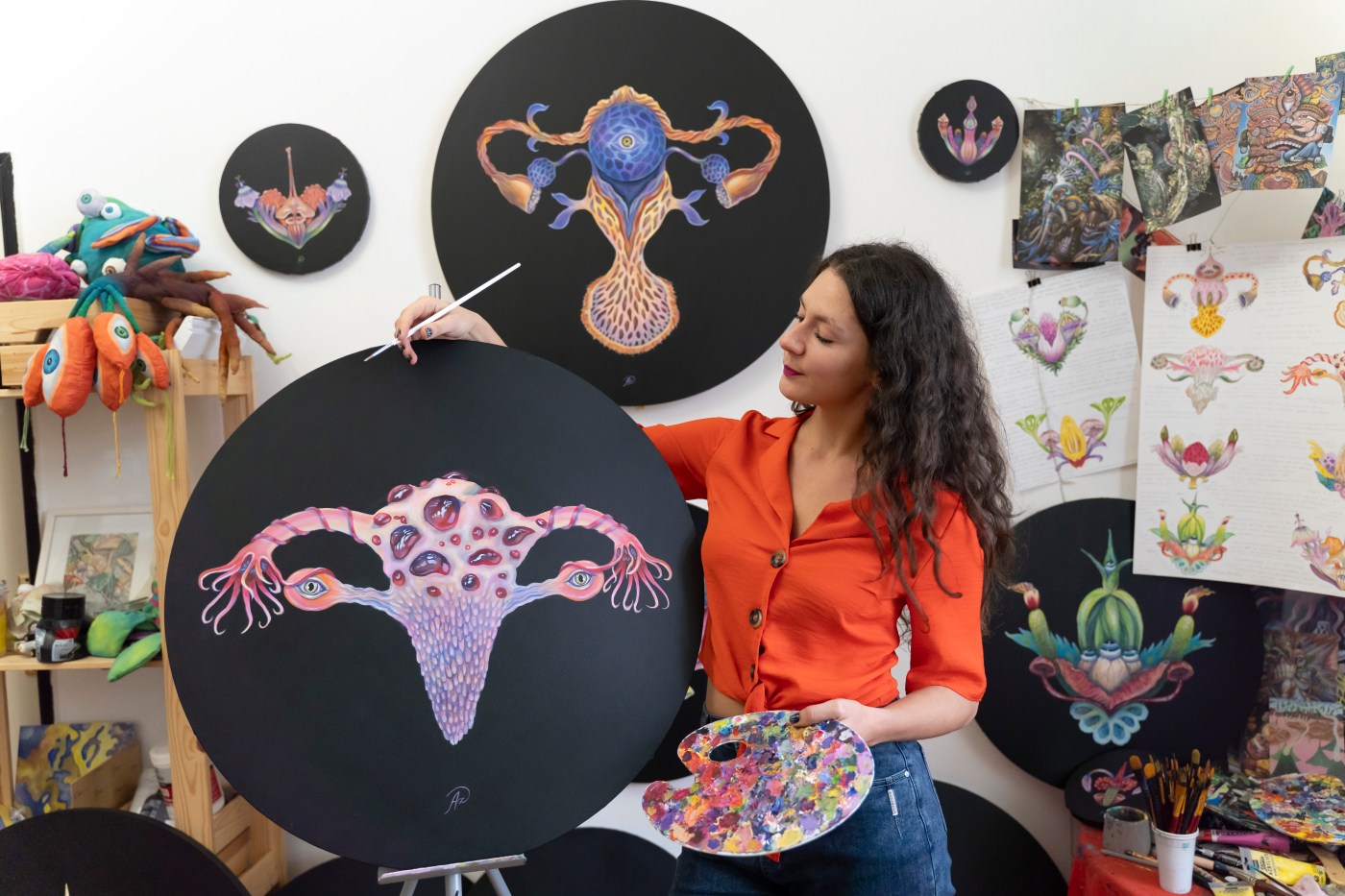
As a woman artist reconnecting with my own nature and the feminine mind of the planet through plant and mushroom medicines, I feel called to celebrate femininity through plant and mushroom beings in my artistic work. Many of my paintings resemble women’s organs made of plants and other organisms. These artworks are often round, with black backgrounds, as if they are universes of dark matter from which nature beings are born.
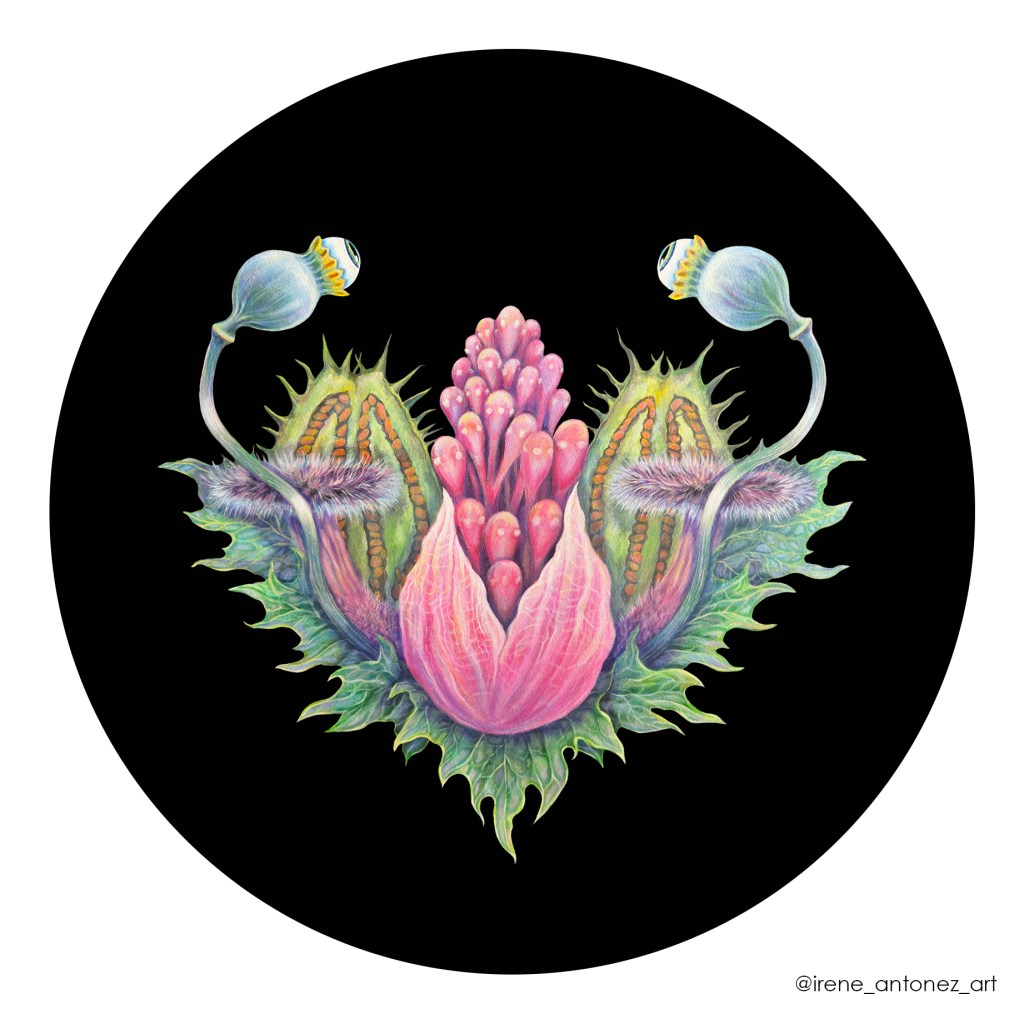
Many things I knew before encountering psychedelics were perceived only by my logical mind, until, through direct experience, I felt them in my body and fully understood them. Since then, my paintings celebrate animism, depicting plants, fungi, slime molds, and microorganisms as sentient beings in their own right. I do not anthropomorphize them; rather, I aim to respect their agency and presence.
My practice is enriched through working with professional microscopes during residencies and archival research, studying herbalism, botany, and mycology, visiting institutions such as the Fungarium, the world’s largest fungal archive, and teaching at mycological and psychedelic conferences. In recent years, I have also been visiting botanical gardens everywhere I go, returning with sketchbooks full of ideas. I was especially fascinated by Kew Gardens, Alnwick Poison Garden, a fantastic place for my recent research on poisonous and witch plants, and the Royal Botanic Garden in Scotland.
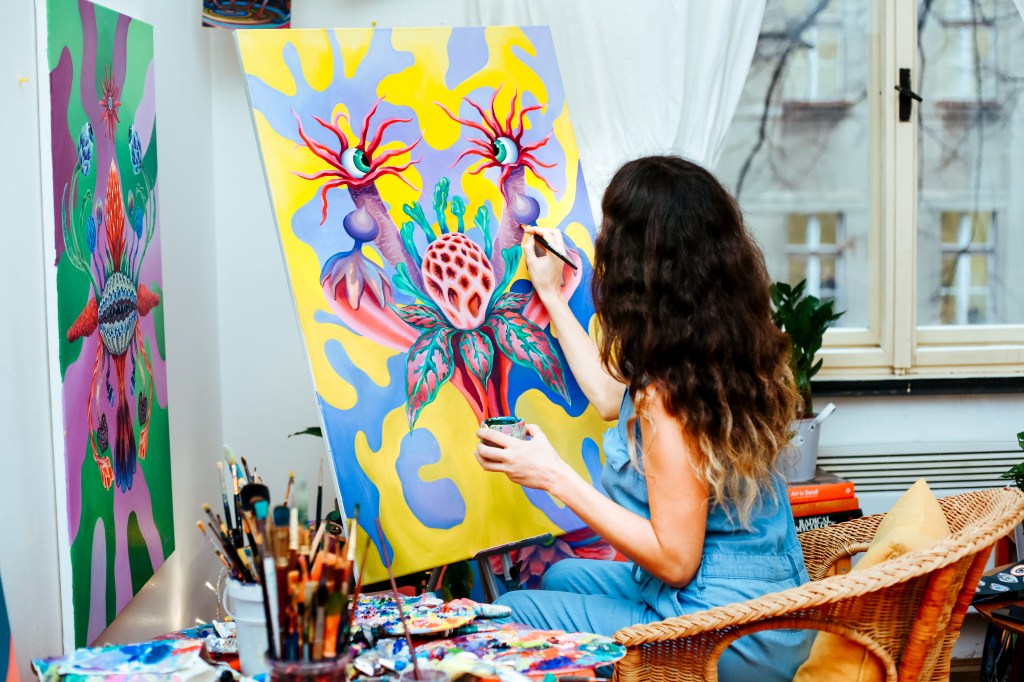
Why do I keep tirelessly painting plants and mushrooms? I never stop asking myself this question, and the answers keep multiplying. The incredible feeling of a deep intrinsic connection to fungi and plants. The sweet thrill of discovering and getting acquainted with new species and their hidden powers for our minds, souls, and bodies. Their ability to keep us in the present moment, making us forget phone screens and everyday duties, grounding us in the here and now. The breathtaking richness of shapes, colours, and smells they bring forces my hand to reach for the brush every time I interact with them. One eye on the microscope, the other on the painting, just like scientist and artist Ernst Haeckel did. His work, highlighting the importance and necessity of the union of art and science, influenced me tremendously.James Bridle writes in Ways of Being: “We learn, change, develop, and grow when we move and entangle ourselves with the world in unexpected ways.” And so I continue to entangle myself with plant and fungal worlds through sketching for hours in the forest and then painting in my studio, through microscopic and macroscopic photography and psychedelic visions, through dreaming with dream herbs, mushroom picking, studying herbalism, and learning indigenous ways of being and seeing nature.
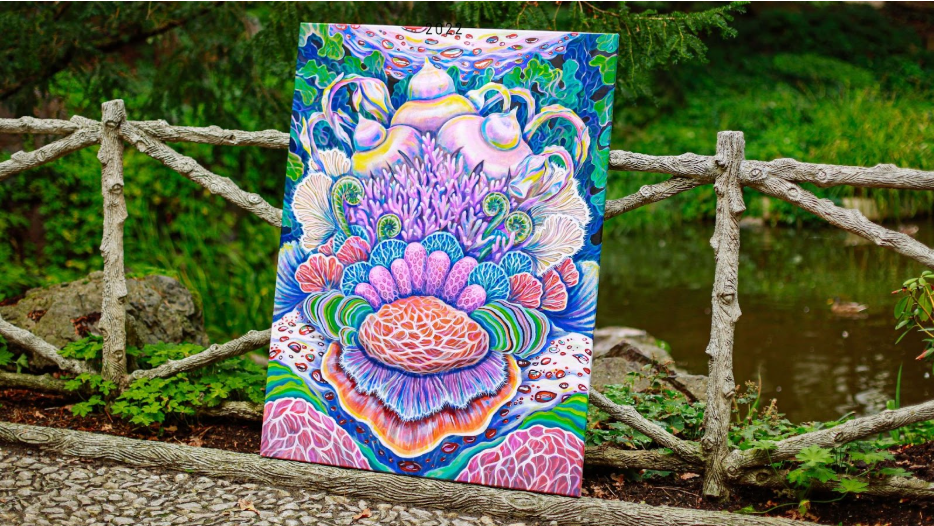
As an artist, I not only use my art as a tool to connect with plants on multiple levels, but also to bring attention to these organisms, so often overlooked or thought of as inferior. In Braiding Sweetgrass, Robin Wall Kimmerer writes about reciprocity with the natural world and indigenous knowledge: “In the indigenous view, humans are considered somewhat lesser beings in the democracy of species. We are referred to as the younger brothers of creation. So, like younger brothers, we must learn from our elders. Plants were here first and have had a long time to figure things out.” In my paintings, plants, slime molds, flowers, and microscopic organisms are the main heroes, alive and looking back at the viewer while mesmerising her with their infinite colours and shapes, whispering: We are you, and you are us. By stepping into our world, you move closer to your own nature.
My way of connecting with plants is experiential, embodied, and slow: through long walks, patient sketching, precise microscopy, or working with non-ordinary states of mind. But undoubtedly, it is rewarding: I am a happier, more fulfilled, more reconnected, and more whole artist, woman, and human being when I am around plant and mushroom teachers.
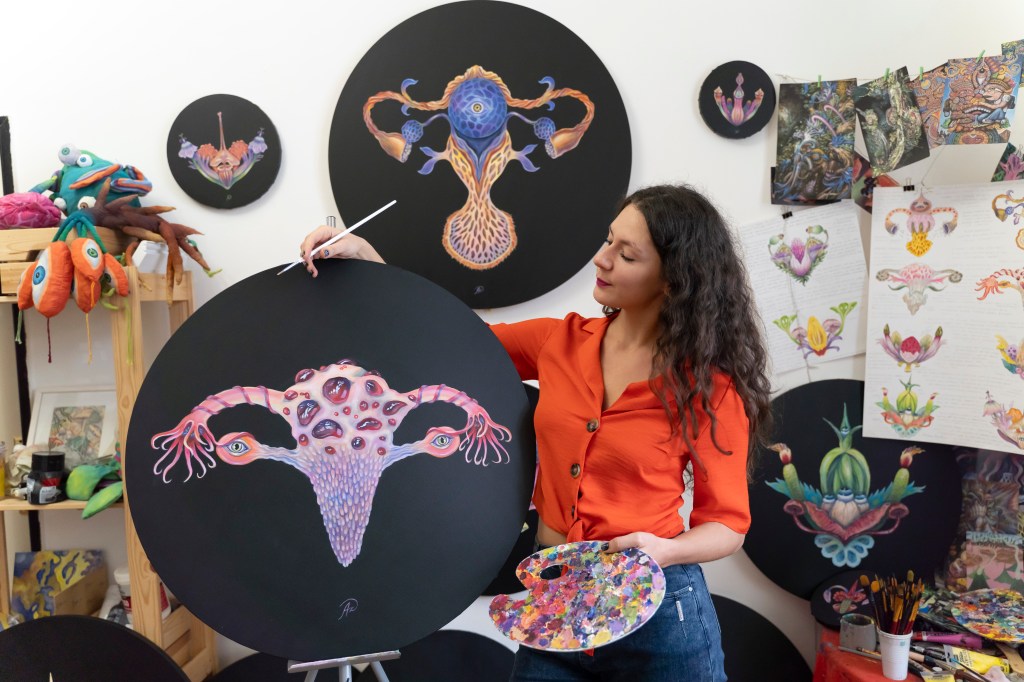
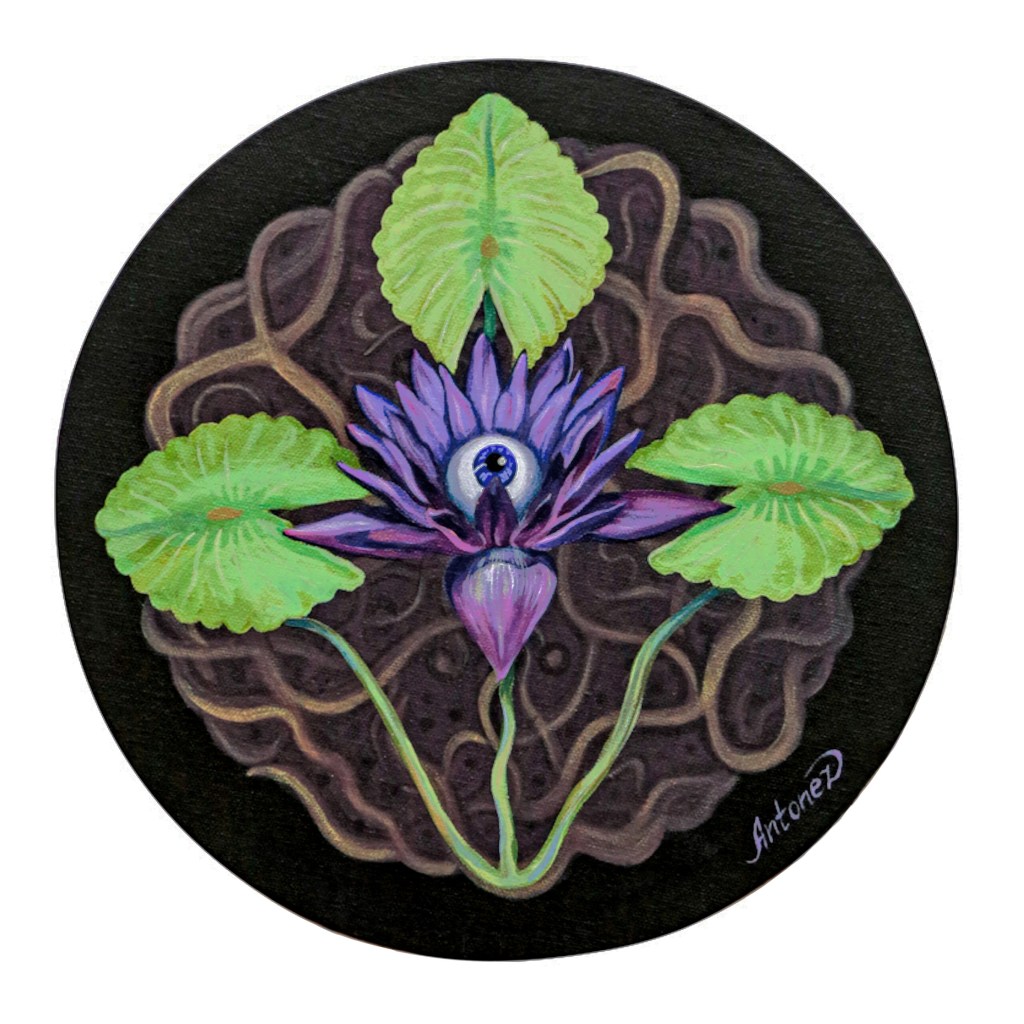
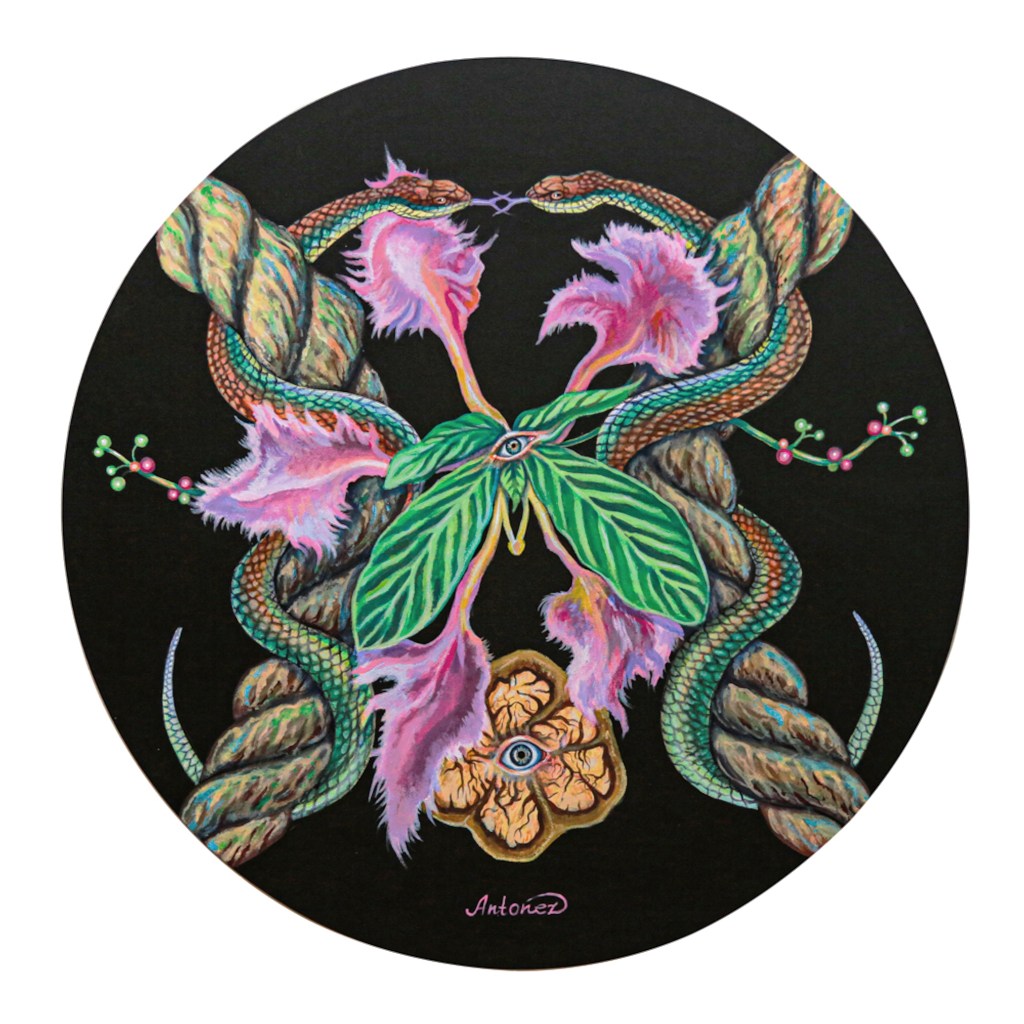
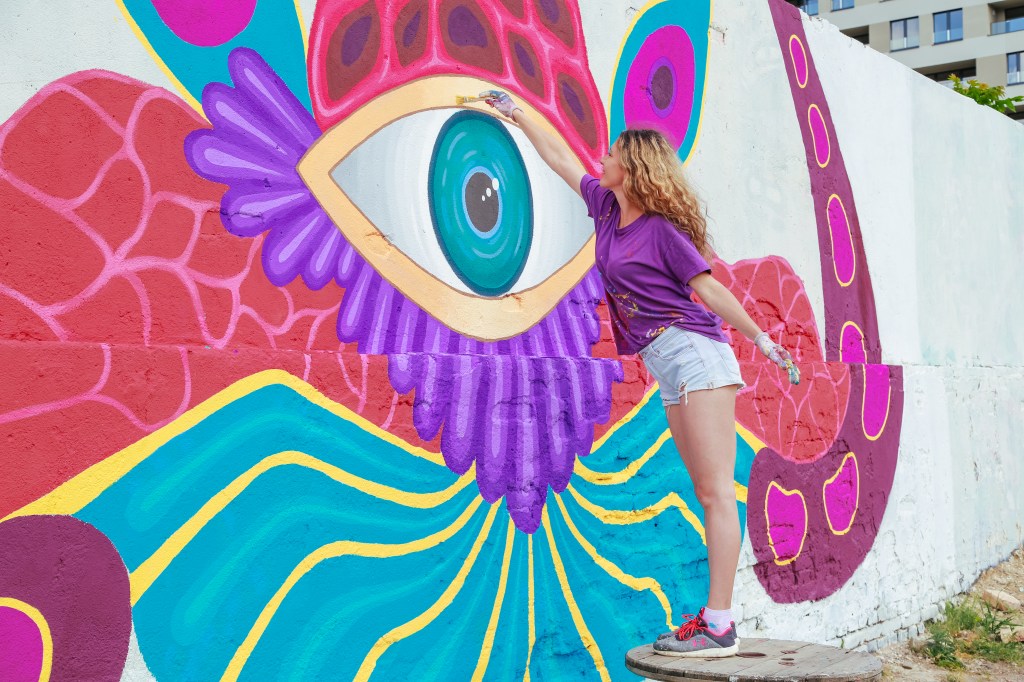
Figure 10: Top left -The artist in her studio in Prague, with the painting Wild Side from the Femnomenal Nature series, 2025, top right – Blue lotus, bottom left – Banisteriopsis caapi & Psychotria viridis
Author bio :
Irene Antonez is a Prague-based multimedia artist, specializing in surreal, botanical, psychedelic-inspired paintings that explore the intersection of nature, animism, and the philosophy of psychedelics. Her work often features entheogenic plants, fungi, and microscopic organisms, inspired by her deep connection with nature and research into Indigenous knowledge and rituals.
Antonez’s work has been showcased in various group shows and solo exhibitions alongside art festivals such as All Things Fungi Fest (UK), Pilz Fest (AT), Fenix Fest(CZ), Fungi Fest (DE) Ozora Fest (HU), with pieces in private collections worldwide. She has been featured on podcasts like Welcome to the Mushroom Hour and Mycopreneur and starred in the short film Mushroom Magic, based on her art.
LINKS :
Newsletter:
https://mailchi.mp/d0bcbdbd80ae/irene-antonez-art-newsletter
Etsy:
https://www.etsy.com/shop/IreneAntonezArt?ref=seller-platform-mcnav
Instagram:
https://www.instagram.com/irene_antonez_art?igsh=MWxtam5iMzV2M3oxaQ%3D%3D&utm_source=qr
Email: ireneantonezart@gmail.com
Open call:
If you would like to contribute an article to the SEB student blog, go ahead and send your plant story to Nishanth Gurav, email: gurav@ftz.czu.cz
Minimum: 500 words, maximum: 2000 words (including pictures) including title and article
 Society for Ethnobotany // Student Blog
Leave a comment